Squla
Re-imagining digital education for young children
My role:
UX Research
Visual Design
UX Design
Duration:
18 weeks
Team members:
Design Lead
Illustrator
Client:
Futurewhiz

Grades 1-2

Grades 3-5

Grades 6-8
Futurewhiz is Dutch company that develops paid educational apps for kindergartens and young children from grades 1-8. These are intended to support children’s education outside of school in multiple subjects, by providing fun quizzes tailored to each grade.
They’ve divide their product offering into 2 segments:
Squla (for grades 1-5)
Studira (for grades 6-8)
This project focused on Squla’s app and children with ages between 5-9 years old.
I collaborated with my team and Futurewhiz stakeholders to identify market opportunities for young students and parents in grades 1–5. We explored potential solutions, defined key market requirements, and crafted a North Star vision. The ultimate goal was to design an MVP for Squla to validate both customer and business needs.
Problem
Squla is the market leader in the Netherlands for educational apps for children in grades 3-5. However this position has been dropping every year, specially for new generations in the early grades of 1-2.
Together with the UX Researcher, interviewed 10 parents and 10 children, including both existing customers and non-customers, across various ages and school performance levels. Additionally, we developed a survey targeting around 400 parents to validate the insights, understand their market-wide relevance, and identify potential customer segments
After conducting research on literature and academic studies, I’ve defined 5 key principles to create engaging learning experiences. These principles, combined with the interview and survey findings guided me to design a solution for a new product proposition.
Research
stage
Interviews and Survey main findings
5 principles for making engaging learning experiences
How children’s needs change with their age or grade
Two solution scenarios emerge with different requirements and age groups
Solution
exploration
Scenarios overview
Scenario development
With the insights gathered from research, I’ve designed a map with the two possible directions that Futurewhiz stakeholders can take Squla. One is positioned on providing a more open educational experience that gives additional challenges to children after school. The other one focus on providing educational resources to children that are struggling in specific school subjects
Workshop
I’ve outlined the key requirements for success and facilitated a workshop with my design lead and Squla’s stakeholders. Together, we assessed how the current product performed against these requirements and analyzed competitor performance for each one. The goal was to determine which scenario Squla should pursue further and develop into an MVP.
Stakeholders decision
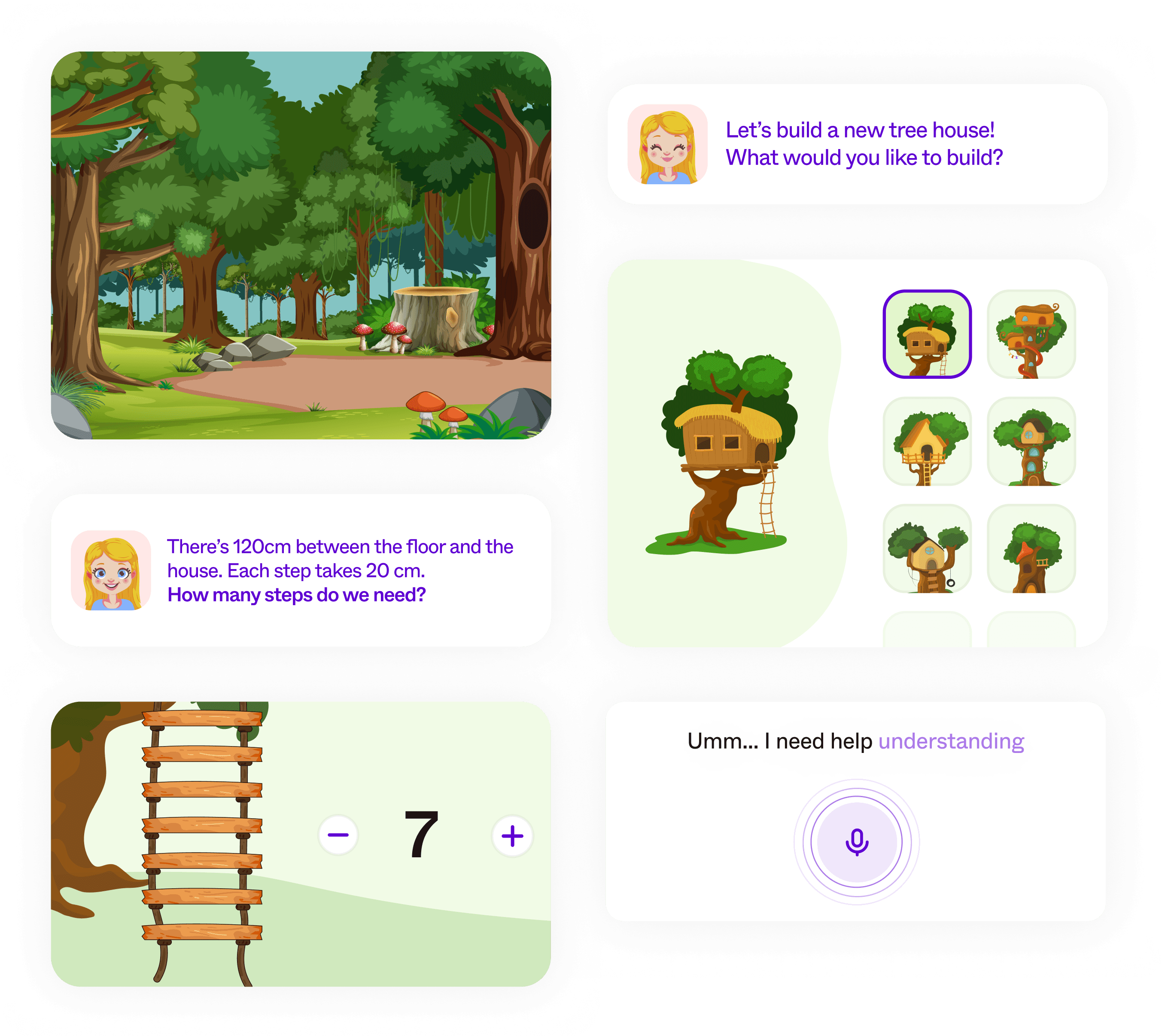
Squla’s stakeholders chose to pursue a new product concept focused on a game-based, playful learning approach designed to engage students across all age groups.
Solution
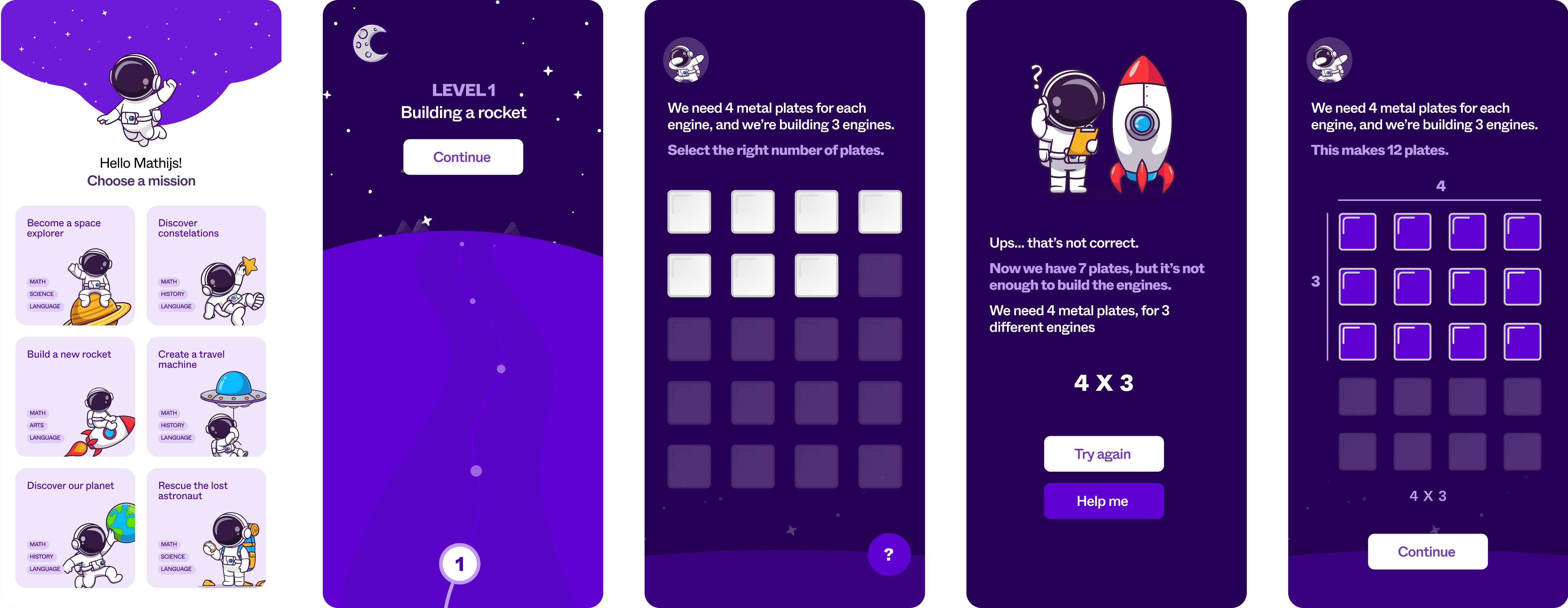
Story-driven
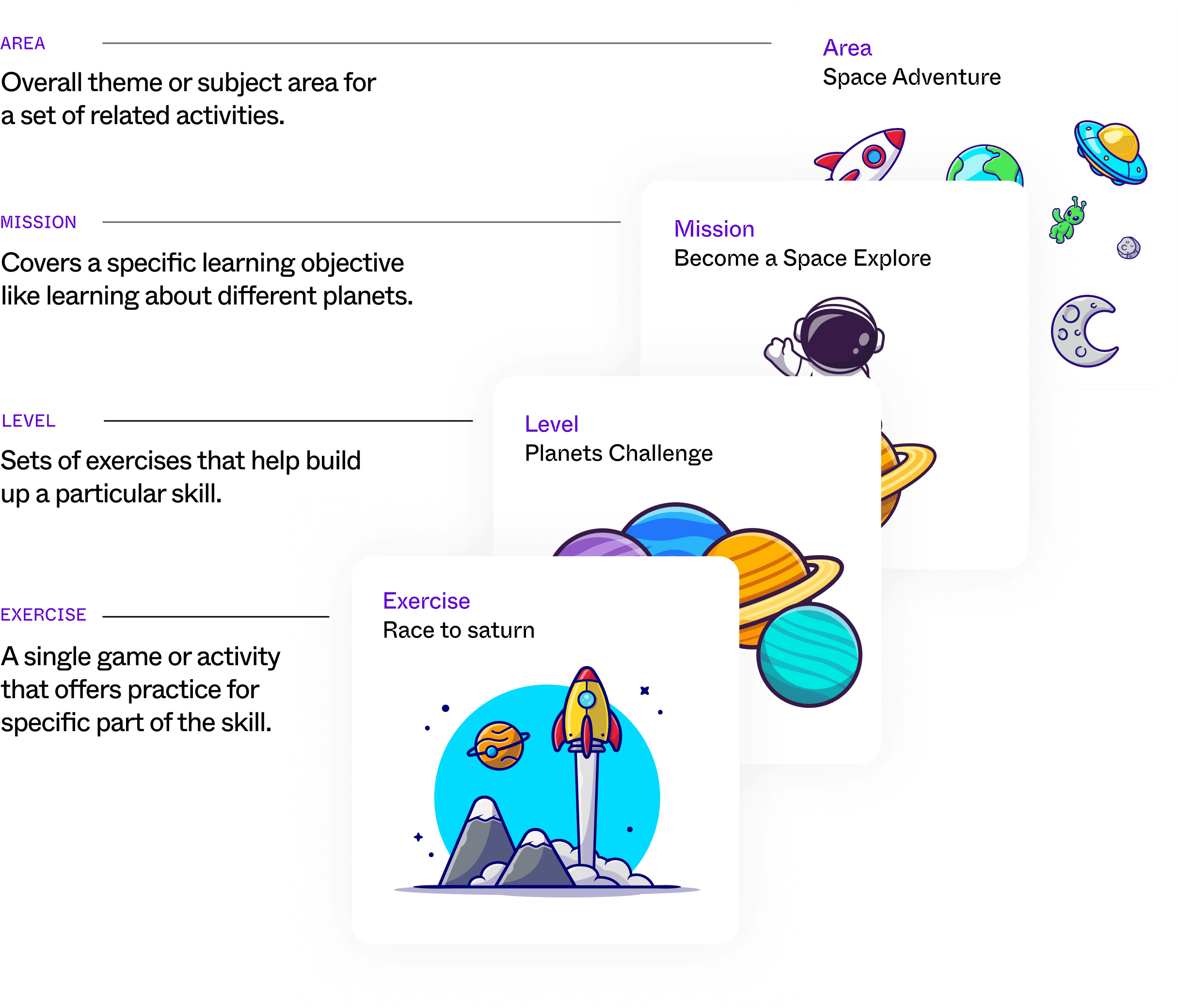
By making education feel like an adventure, children can advance through engaging projects that transcend traditional school years.
Blending core subjects within stories, showing how different areas of knowledge link up
Learning objectives become missions, encouraging kids to tackle new challenges
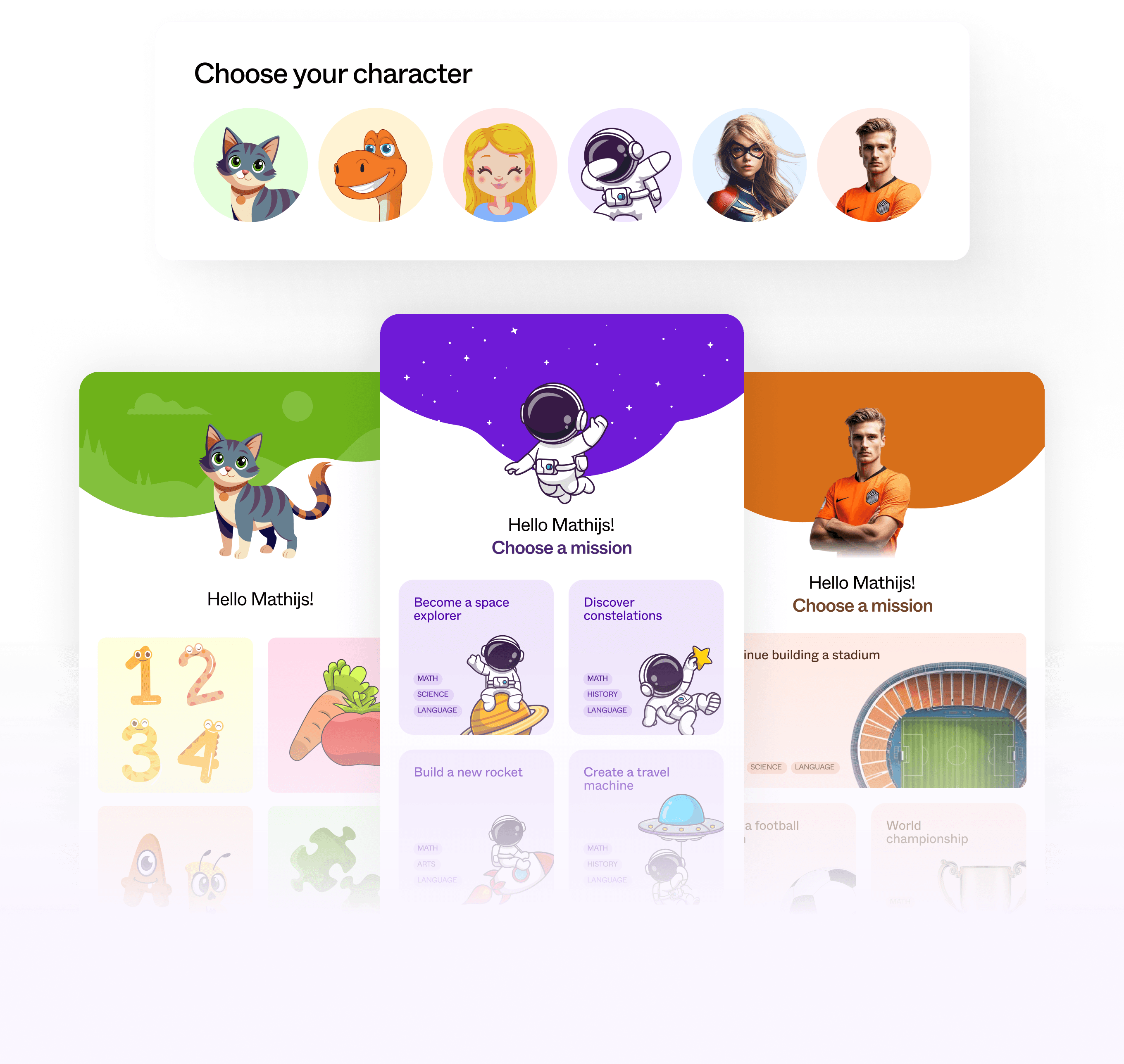
Grows with children
Activities and stories evolve with a child’s development, tailoring these educational experiences to their needs and age.
From free play to complex games in more advanced ages
Designed around children’s interests, with customisable characters that evolve with them
Game-based learning
Traditional school systems are not designed for how kids learn. Through games we propel a child’s understanding of school subjects and introduce new skills.
Provides autonomy and choice for creative solutions
Explains and connects concepts in relation to their world
Finds the optimal spot of challenges that aren’t frustratingly hard, nor easily boring